SwitchedToLinux
Science & Tech
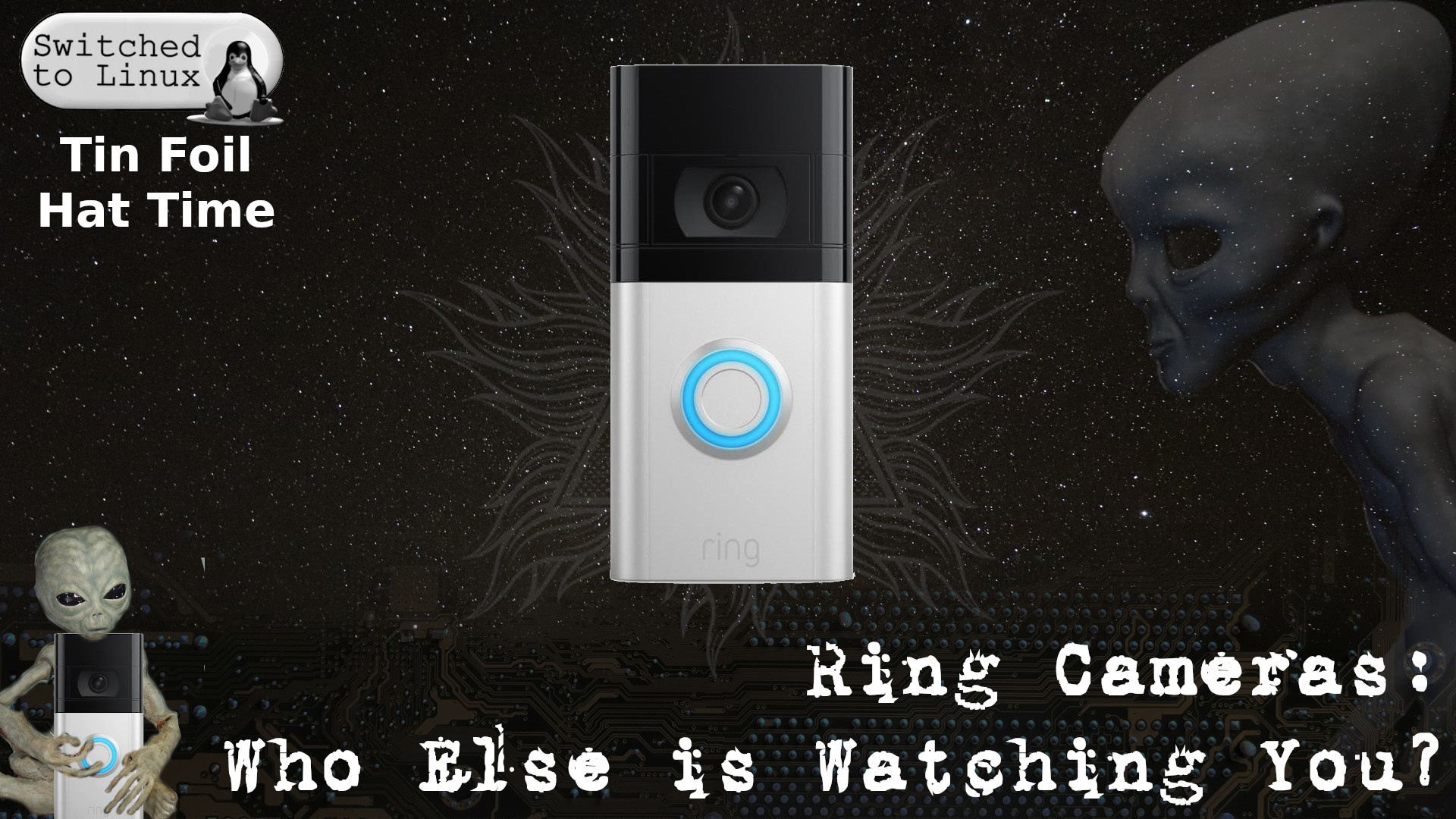
Ring Cameras - What If My Neighbor Has One?
Inside the Ring
December 13, 2022
post photo preview

Intro

Your neighbor installs a Ring camera, and you are concerned that the thing can watch you come and go. Of course, your neighbor will get a notification every time you walk in front of the camera, and considering how addicted most people are to their cell phones and stop everything to check a notification, the gross paranoia of present-day America is that your neighbor will know every time you come and go.

Even worse if the camera in an apartment complex is set up in such a way that the Hal9000 can peer past your shoulder into your house whenever the door cracks open. So should be concerned when we first step outside and see that the Burbs next door have placed a camera pointing in the vicinity of your door? This is the exact situation in a recent r/slash video. You should watch the full exchange, but here are a few clips.

Of course, the focus on the clip here looks only at the positives. These are the reasons you may want a Ring camera ever peering at your front steps.


Why a Ring Makes Sense


Security cameras are a good thing in general, and Ring has created a camera that is available to the masses. They are cheap (and all similar products on the market are cheap), but the trade-off is they connect into big data servers. But we will talk more about that later.

The average person may want a security camera looking outside to capture the swash bucklers of the high suburbers...that is the porch pirates looking to steal packages from consumerized shoppers forced to buy gadgets online. To be sure, the pirates are not looking for your subscription mac & cheese, but the cameras, phones, and other techno-gadgets we have been addicted into buying.

The scenario here, however, is one of looking at your porch versus looking at a common area shared by everyone. We can probably all agree that a camera looking at your front porch in a suburban neighborhood is certainly different than a camera in front a common area with many shared doors. Sure that one Ring can protect the whole group of doors from the pirate, but at what cost? This is what we are examine next.

The Inner Workings of the Ring

Ring was purchased by Amazon for about $1.5 Billion dollars in 2018. This surveillance acquisition complimented the voice analysis company Alexa and the web services company AWS, which is also used frequently by law enforcement.

Of course the website will grab the usual suspects for advertising, the camera itself has some give and take. Allegedly, if we can believe the company, the Ring doorbells do not record or store any data by default. You can set it up to connect to your phone and receive notifications when the camera detects movement or you can live stream the feed from your device.

Of course, they are always pushing their Ring Protect plan which will store all the motion activated clips in the cloud for a period of time. They also push the Neighborhood app to give your neighbors and local police access to the videos you have selected to share with them. These are stored on AWS, and the the videos are transmitted and stored encrypted. But while they are encrypted, it is not zero knowledge. This means that they are stored encrypted on company servers, but the company has access to the encryption keys. This is made clear in that you can authorize a support team member to view data. This means that a rogue employee can gain unauthorized access to the data. Additionally, police can gain access to the data on the servers.

Ring has law enforcement transparency reports since 2019. The low number of requests for that year (about 536) suggests that people just did not have as many cameras, or they only logged data for half a year. The requests shot up to over 1600 the following year and the requests have doubled since then. In the first six months of 2021, Ring received over 2500 requests and the number rose to over 3000 requests in the first six months of 2022. Reports also surfaced of police gaining access to data without permission of the customer, a violation of the policies that Ring states on their website...so pardon me if I do not believe they are not recording more information than they say.

The Real Problem with Ring

There were initial problems with Ring in that when Amazon first bought the company, everything was unencrypted and all employees had access to everyone's data feeds. This was apparently fixed and the company added encryption, but that is not enough.

Controversy arose in 2019 when leaked documents suggested that Amazon was working on a facial ID platform based on Ring to identify "suspicious persons" spotted by the network of Ring cameras. Part of this was the confirmed use of Ukrainian sub contractors to annotate Ring footage with facial recognition notes. Amazon denied the use of Facial Recognition, but the documents were pretty clear.

Additionally, as mentioned prior, the encryption is not zero-knowledge, so the employees do have access to the ring footage that is on the server. Several employees were terminated by Ring for accessing the data without consent. But this is the problem itself...rules and laws do not prevent access to information that is available...there for the taking. The biggest threat model in any company is the employees who are working there, so letting Amazon have your ring data is already asking for trouble.

Finally, we have seen already how many law enforcement requests are being made to the company, and this is compounded by the fact that police are the drivers of encouraging people to use the Neighborhood app and over 600 police departments have created partnerships with Ring, being able to access the footage in the Neighborhood program. But you may not have known that, because you didn't read the terms of service.

Of course, police accessing your videos without a warrant is easily a violation of the fourth amendment, but many people are not raising an issue about this.

These things taken together, there are fundamental issues with Ring and it should not be forced upon people who do not want be to seen or recorded by it.

The Real World Response

Security cameras are a good thing to protect your property, but if you share common areas, you should indeed consider the other people who use that space with a product that has many questionable ties. While IP camera that does not feed into a global-national company with questionable motives is a better solution, such a system is more expensive and more difficult to set up.

If you do decide to use a Ring camera, whether it is in your own isolated property or sharing common space, it is probably better to not consent to storing your images on Amazon servers and not participate in the Neighborhood app. Also, be courteous to make sure your camera cannot see into someone else's apartment.

Like all other things in life, the easier something is to use, the more risk one takes on. I would say figuring out how to use an IP camera system that does not feed into a surveillance product is a better way to manage security. But if you are into the IoT solutions, invest time to discover how to use Home Assistant, which is a FOSS IoT platform. Home Assistant is a self-hosted open source platform that will work with several home automation tools including Ring cameras. This will bypass Amazon servers and use your own servers instead.

If neighbors complain about a camera that can see into their house to can monitor their coming and going, it may be best to figure out a better solution to your security.

I hope this has been informative, and I also hope that you will take the time to learn some new skills in technology to break your dependence on big companies with questionable motives.


 

community logo
Join the SwitchedToLinux Community
To read more articles like this, sign up and join my community today
1
What else you may like…
Videos
Posts
Articles
Thank You for Supporting on Locals!

Thanks for your support. By supporting SwitchedToLinux, we are able to spend more time working on tutorials and looking at software to help people make the transition from spying software to tools that respect our rights.

00:03:00
April 08, 2025

It might just be me, but I've found even on GrayJay I don't get your SwitchedToLinux YouTube streams, or anything YouTube for OurWalkInChrist, instead I only see that you've uploaded or are live from Rumble (and sometimes Twitch), or from going to your channel page. I wonder if YouTube is interfering with being able to see your stuff on third party apps as well.

No Show Today, Hangout Only

No show tonight due to Halloween, but we will do a hangout at 7:00p on the normal link.

@SwitchedToLinux Just watched your recent video on Western Digital. FYI - You can install Windows To Go with RUFUS. I have a Windows 10 and 11 installed on 32 GB USBs. They work without issue.

post photo preview
Collective Crime
Science Fiction Short Story Series

Audiobook Info at the Bottom

Part I – A Business Proposal

The footsteps of both men echoed down the institutional hallways as Simon, being led by his new supervisor, looked at the random notices on the walls interspersed between research doors. Many of the closed doors had paper over the windows, blocking out any presence of other people in the seemingly empty building.

“Our offices are down this way,” he reminded Simon, remembering he only visited the office space once in the interview process.

The door swung into a receptionist's office. The large, scowling woman glanced up from the computer screen.

“Hi John,” she said with disinterest.

“Do you have Simon’s packet ready?”

“Uh huh,” she said, retrieving a file folder and blindly handing it up.

“Thank you...Sally,” Simon said, hesitating to read the nameplate on her desk.

“Uh huh,” she mumbled again, still affixing her eyes to the computer screen.

John led him passed the desk and through the door straight down the hall. The door opened with a ratty creak, and the two men stepped inside.

“I got your replacement, Mike,” John said to the man sitting in front of a panel of computer screens.

He turned to Simon and shook his hand. “Welcome to Collective Camera Co.”

-----

Simon walked around the room looking at all the equipment. The room clearly monitored several cameras, all of which randomly cycled through different streets. The screen detailed a printout of all vehicles passing through a collection of records like a compiler spitting out lines of code. An occasional beep alerted the monitoring room of an anomaly by outlining screens in red, waiting for a button to be pressed after acknowledging.

Each computer processed information for five monitors. All three computers synchronized the LED colors in the cooling fans. The single screen rolling the log of captured vehicles emanated from a separate computer, different in design from the others.

Turning his attention away from the monitors, a small desk with a simple desktop computer sat upon the far corner of the room. A dorm refrigerator fit under a small stand with a coffeepot. A few jugs of water closed the gap between the refrigerator and the wall. The room’s remainder was plain and institutional.

“Are you from these parts?” Mike asked.

“Nah. I just moved here. Came from Austin. I needed to get away from my crazy ex.”

“I know that feeling,” Mike said. “Not from personal experience. My wife and I have had twenty lovely years. But my ex-sister-in-law is a psycho!”

“So, why am I replacing you?” Simon said, changing the conversation topic.

“I needed a little more bread, so I’m changing companies to find a raise.”

“Can’t you get a raise here?” he asked.

“The company issued wage freezes a few months ago. They are trying to tighten our belts to loosen a few notches for the investors. The C-suite still gets their adjustments. A bit of a travesty.” Mike offered.

“I was wondering why they asked if I would be happy with the hiring wage for at least a year.” Simon countered.

-----

Simon shoveled the last of the microwave Salisbury steak into his mouth and washed it down with the last of the cola. He pushed the tray to the center of the table and grabbed the stack of mail. He opened the first credit card bill, seeing the balance. The interest alone accrued more than he wanted to pay on a single card, but the line about taking seventeen years to pay it off made the steak settle like a rock in the pit of his stomach.

“The age of a minor child,” he mused to himself. “That’s how long I pay for this crap.”

With a nodding head, he neatly placed the statement down on the table and grabbed another piece of mail. The electric bill rose twenty percent. An insert in the bill explained the rise in costs incurred because of the increase in demand for power from the community. Another forty dollars beyond what he expected. The remaining bills added up to more than he had budgeted for basic expenses. His neat pile of bills called to him, but he ignored the call and plummeted into his chair, switching on the television to numb his brain some more.

“At least I found a job,” he muttered to himself.

Being unemployed for a few months added to his debt, and his wage is not what he had hoped he might incur for the experience in computer systems he brought to the table. The subtle sounds and lights hypnotized him into a deep sleep in the chair.

-----

Simon walked down the hallway with more confidence than he had on his hiring date three weeks ago. The blackened doors no longer intrigued him, and a confident stride replaced his formerly sheepish steps. He opened the door to the offices, greetings Sally.

“Uh huh,” she always said, as he walked past her without stopping and into his room.

He opened the door to darkness for the first time. Mike moved on to his new job today, so Simon leaned on his training alone for the first time.

Without supervision, he watched the monitors and glanced over to the log, adding new vehicles and appending the database of the pre-existing ones. The screens lit up with notices and flags, all perfectly managed by Simon, a master of the data.

The door opened unexpectedly. John walked in with a paper in his hand.

“We received a warrant. Did Mike walk you through the procedure?”

“No,” Simon said, “but I read the SOP a few times. I should be able to handle it.”

“Great,” John said, handing him the paper. “Get me the full readout on the central server. Once I look it over, I’ll pass it on.”

Simon looked at the paper and nodded to John, who quickly dismissed himself from the room.

Simon approached the computer and opened up the paper. He expected something in the local town, but the warrant looked for the traveling routes of a car throughout the streets of New York City. He punched in the license plate number and found the vehicle in the database. A mapping option showed the various places the car had been recorded by Collective Camera Co, pinging around NYC with timestamps besides a few common destinations in New Jersey and into a small town in Pennsylvania.

He copied the report into a shared folder with John and drafted an email informing him the data awaited review. The report happened quickly, and with no pushback.

“I wonder,” he said to himself. He opened a terminal on the computer and searched for logs. He found the log showing the access to the information and tested adding a line to the document.

Success.

He removed the line and reset the modified date with a command.

“This is too easy,” he said to himself.

Pulling up the access screen again, he entered some information about himself. The database showed several cameras pinging his location with timestamps. He noted the streets to know where to avoid in the future.

He looked up his ex-wife. The cameras followed her around Austin as well. They noted the times she passed by their old house for work in the morning, and they caught her visiting her new fling. He spent a few hours looking at how much detail the cameras had over her movements. He traced the dates back a few months to their breakup and overlaid his car movements with hers, showing them occupying the same space. That was before. This is now. Simon is overworked and underpaid, and progressing into debt.

An idea ran through his mind.

“A data service,” he thought.

Collective Camera Co focused its database marketing mostly to governments and law enforcement with only a few targeted data brokers sharing reciprocity with data. But he had access to the system and the means to clean his access logs.

Simon launched an instance with an AI to create a webpage selling access to targeted location data for anyone in need. His hidden marketplace became indexed with hidden directories, and inquires started filling up a masked email address.


Only for Supporters
To read the rest of this article and access other paid content, you must be a supporter
Read full Article
post photo preview
The Invisible Man
Science Fiction Short Story Series

Audiobook info at the bottom

Part I – Business is Good

Vittorio Fiorentino placed the newspaper on the desk and looked up to Tonio. The smoke from his cigar clouded the dimly lit warehouse corner.

“I see the authorities let the kid off with a warning.”

“As predicted, sir.”

“What was our take?” Vittorio asked.

“Only fifty dollars. Not bad for a rando.” Tonio answered.

“Indeed,” he said, puffing his cigar. “Soon we will not need to target the randos anymore.”

“Sir?” Tonio inquired.

The warehouse door opened, allowing in some noise from the city streets. A dark figure glided along the floor, approaching the corner of the room where the desk created a separate office space. The man reached into his jacket pocket and retrieved what looked like a phone. He placed it on the desk and nodded to Vittorio.

The boss picked up the device and clicked a few buttons. The screen displayed two names with a headshot of each person. One name included Tonio and the other, Richard, the man who brought in the device.

Vittorio clicked on Tonio’s name and read through the profile. He clicked the screen off and set the device back on the desk.

“Very good, Richard,” his raspy voice exhaled more smoke as if he were a conniving dragon. “Here is your payment, as promised.”

Richard nodded his head and took the bag, opening it to verify the boss actually paid him. He nodded again and turned to walk out.

Vittorio picked up the device and clicked back and opened the profile for Richard.

Salary estimated $150,000, usually pays cash, interested in gardening, baseball, and sports betting. Android phone, Windows computer, technology novice…

The list continued on. The boss now had a means to see information about the people in his vicinity based on the same tracking technology used in the new advertising kiosk roll-outs. As people walk down the city streets, the kiosks read the phone IMEI data and connect to the databases, determining what type of advertisement would best motivate them to buy something. His new device simply read the profile metadata to capture more relevant information for his enterprise.

“This thing works well, Tonio. See what it says about you!”

He clicked back onto his right-hand man’s profile and showed him the screen. Tonio confirmed the frightening accuracy of the report before him.

“Why aren’t you showing up?” he asked.

“I’m using a Faraday box. Something you will start using.”

-----

Tonio walked up to the bus stop and sat down on the bench next to a teenager. His leg nudged the kid, and they made silent eye contact. The teen nodded and winked at him. Tonio removed the device from his pocket and scanned the people in the vicinity. The device sorted profiles by net worth, so he clicked the top profile. This person used the digital payment system more often. The application also suggested few hobbies. The second profile showed a woman’s face. He clicked through to see a person with a penchant for cash and coffee shops. He noticed the cash and identified that the bus’s next stop would be close to a coffee shop she frequented.

Tonio full-screened her picture and scanned crowd. He spotted her and nudged the kid again. He showed him the photo and pointed to her in the crowd. The teen acknowledged the target. Tonio leaned in and whispered in his ear before standing up and walking away from the bus stop with the device in his pocket.

The teenager got on the bus and took a seat a few rows behind his target. He watched her pass time by scrolling her social media feed. She pulled the cord for the next stop and gathered her bag to get off the bus. The teenager also got off the bus at the back door while the woman exited at the front. Predictably, she went into the coffee shop. The teenager confirmed her entry and leaned against a light pole and texted out a few messages. He moved into the small alleyway and watched her from just beyond sight of the door.

The target eventually gulped back the rest of her coffee and tossed the cup away. The door pushed open into the humid night in the bustling city. She stretched out her arms and began the walk to her apartment at the end of the block.

The teenager stepped out of the alley with his knife already pressed against her stomach.

“Your life or your money,” he snarled into her face.

Fear gripped the woman, who could not help but let a tear out of her eye.

“Take it all,” she yelled.

A tall man heard the scream and yelled at the two people at the opening to the alley. The teenager snatched the bag at the end of the woman’s arm and ran into the dark alley. The tall man gave chase, but the teen’s knowledge and experience in the dark alley system outmatched him.

The man returned to the victim, failing to apprehend the teenager. By this time, the woman had already pushed the panic app on her phone. The app gathered all the data of all the people in her vicinity for the last five minutes, allowing the police narrow down suspects. The police arrived and spread out to talk to everyone on their list who matched the description the woman provided.


Only for Supporters
To read the rest of this article and access other paid content, you must be a supporter
Read full Article
post photo preview
Pollentia
Science Fiction Short Story Series

Audiobook Info at the Bottom

Part I – A World in Harmony

Ellas leaned back on the bench seat, watching the autonomous cars go by. As usual, riders only occupied about half of the cars in movement. The empty cars routed automatically to pick up a rider or being shuffled around by the central scheduling system for strategic deployment. Many vehicles started creating a double file line around the Prod Segment central administration building to prepare for the first shift of employees to leave to fetch a ride back to their unit.

She glanced at her phone, checking on the location of the Tranzport bus. Still a few minutes away, so she turned to the familiar stranger sitting next to her on the bench.

“How’s your son doing in school?”

“Good,” the lady said. “You’re Ellas, right? Council Member Alaric’s wife?”

“That’s right,” Ellas answered.

“That’s great. Is he still at the Crescent Segment?” The lady asked.

She had read about the trade negotiations with the other Segment in the Pollentia Times, as the efforts to keep peace through trade always landed at the top of all the news feeds. Pictures of the Council families often raised them to celebrity status, something that always irked Ellas.

“He is due to arrive back here, then he has to sit in quarantine for a week before he can come home. I hate that part the most.”

A simultaneous notification beeped on both their phones. Ellas glanced at the screen and stood up, awaiting the Tranzport bus. The other parents also stood up and approached the terminal. The bus arrived, ringing the clearance alarm, before opening up the doors to a flood of children pouring out.

“I’ll talk to you later,” she said out of politeness to the familiar stranger, then called out, “Nikolas!”

A dark-haired boy ran up, grasping her thigh.

“Hi, Mommy!” he said.

She looked at him with a smile and took his hand to walk down the stairs to the sublevel for the walk home.

“What did you learn in school today?” She asked.

“I learned how our world made peace with each other,” Nikolas said, jumping from square to square on the floor pattern, trying to avoid the cracks.

“Tell me about it,” she encouraged.

“Since people think differently,” he said, making another jump, “And no one could agree, we decided moving apart from each other was the best solution, so everyone here believes the same thing!”

“Very good, Nikolas. And what are the cities called?”

“Um,” he thought, “Segments!”

“Good.” she said. “And you know your daddy works with the Segment Officials to keep peace between the Segments, right?”

“Yeah,” he said, looking sadly at the ground. “I miss Daddy.”

They reached a raised platform and walked up the steps to their unit. Ellas waved her hand over the security panel and the color switched from red to green with a beep. Nikolas ran inside and threw his bag on the floor without a care. Ellas followed him in and placed the bag up on the stand where it belongs. She grabbed her phone and swiped a notification off the screen, then she opened up the Tranzport app and clicked the button to request a ride for two. The screen confirmed the priority order for families of council officials and reported a five-minute wait for a car to arrive.

“Nikolas,” she called out, “We need to head out again.”

“Why?” He protested.

She placed her hands on her hips and gave him the eye she trained him with to obey without question.

“OK,” he said.

They walked out the door, hearing the lock alarm behind them. The two stood on the Tranzport pickup platform, awaiting the car. The vehicle arrived within a minute and opened the door. Nikolas jumped in first, then Ellas hit the door close button and confirmed the quarantine wing of the hospital was the intended destination.

----

“Daddy!” Nikolas yelled, running toward a glass divider wall.

“My boy!” Alaric declared with open arms. They both touched the glass opposite each other, longing for an embrace.

Ellas took her time walking up while father and son reunited through the miracles of glass containment and a functional sound system.

“Hi Alaric, were the meetings a success?”

“They were, honey,” he said. “We have a potential trade deal in the works, allowing our Segment to provide some raw materials for battery production, and they will provide software technology to streamline Tranzport scheduling, particularly around our Sunday worship schedules.”

“Did you get the feeling peace will remain between the Segments?”

“I learned about world peace in school today, Daddy!” Nikolas proclaimed.

The Global President attained general accord in Pollentia by a tactic of isolation and a strict code of conduct when representatives for two Segments meet together. The prevailing thought kept the peace by isolating people into pockets of deeply held beliefs, allowing each Segment to create their own regulations. Visitors had to remain silent when visiting a different Segment. Thus, peace was only as fragile as the mandatory natural zones between them. Woe to the ones, however, who traveled into those forsaken regions.

Alaric, for his part, worked in the council for his Segment negotiating trade deals between people with different beliefs. The hard work paid well and offered a rare protected means of traveling to see different Segments. Most Pollentian citizens have neither need nor permission to go outside their Segment.

“World peace,” Alaric said, “I wish peace resided in the hearts of men and not in the laws of our nation!”

“When can you come home, Daddy?” Nikolas said, looking up at his father.

“After my one-week quarantine period is over, then I can come home. But I’ll call you tonight and help put you to bed!”

Ellas’s phone beeped a notification that the quarantine visitation drew to an end, and the Tranzport car would be available in five minutes.

“Say goodbye, Nikolas. It’s time to go.”


Only for Supporters
To read the rest of this article and access other paid content, you must be a supporter
Read full Article
See More
Available on mobile and TV devices
google store google store app store app store
google store google store app tv store app tv store amazon store amazon store roku store roku store
Powered by Locals